
New Publication: The Last Romantics: Or, Reclaiming the Muse

Braun & Hughes/The Politics of Classification, 15. The Last Romantics: Or, Reclaiming the Muse | Religion Resource Hub | Equinox Publishing
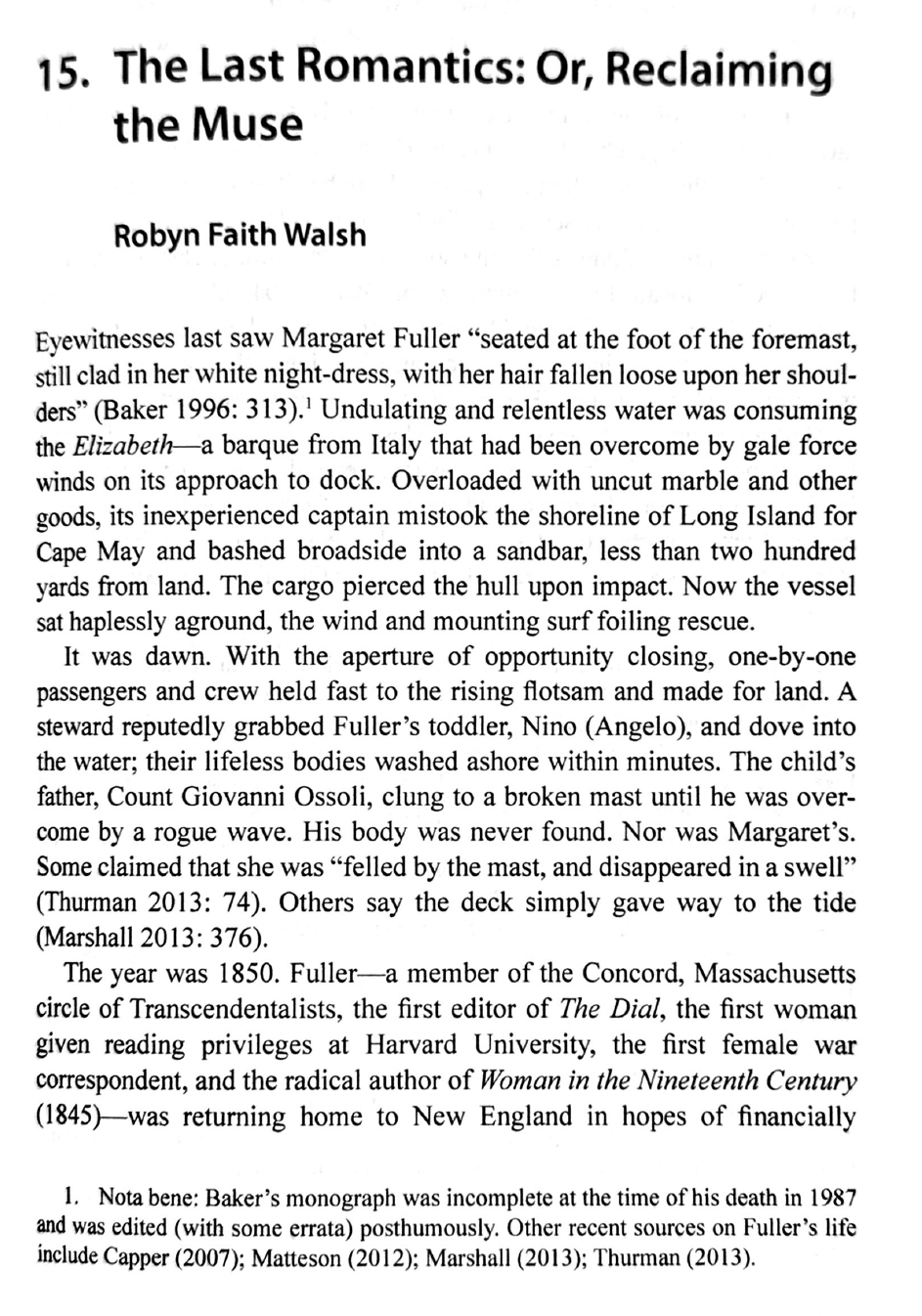
In the final chapter, “The Last Romantics: Or, Reclaiming the Muse,” Robyn Faith Walsh provides an entertaining and smart analysis of the artist, author, or academic intellectual in relation to their artistic or intel- lectual productions. Taking examples from American Transcendentalism and nineteenth-century European Romanticism, Walsh argues that we are still beholden to the romantic myth of the author as an entirely autonomous genius. This means, on the one hand, that this author is not preoccupied with “the vulgarities of literary production and publishing” (Walsh) nor, on the other hand, given to being concerned about a host of extra-intellectual activities of the academy, such as marketing, recruitment, and administra- tion. Such naïve self-preoccupation with “purely intellectual domains,” as McCutcheon once put it, with energy only for one’s art or intellectual proj- ect, gives our academic profession an oft derided insularity that is exempt from social and political obligations. Walsh notes that this romantic myth of the author makes mischief in her own field of early Christian and New Testament studies, a field that despite decades of criticism, continues to reserve for its sources an uncontaminated exceptionalism, the product of inspired authors that resist comparison. Walsh presents McCutcheon’s work as an antidote to this myth of authorship and its implications.

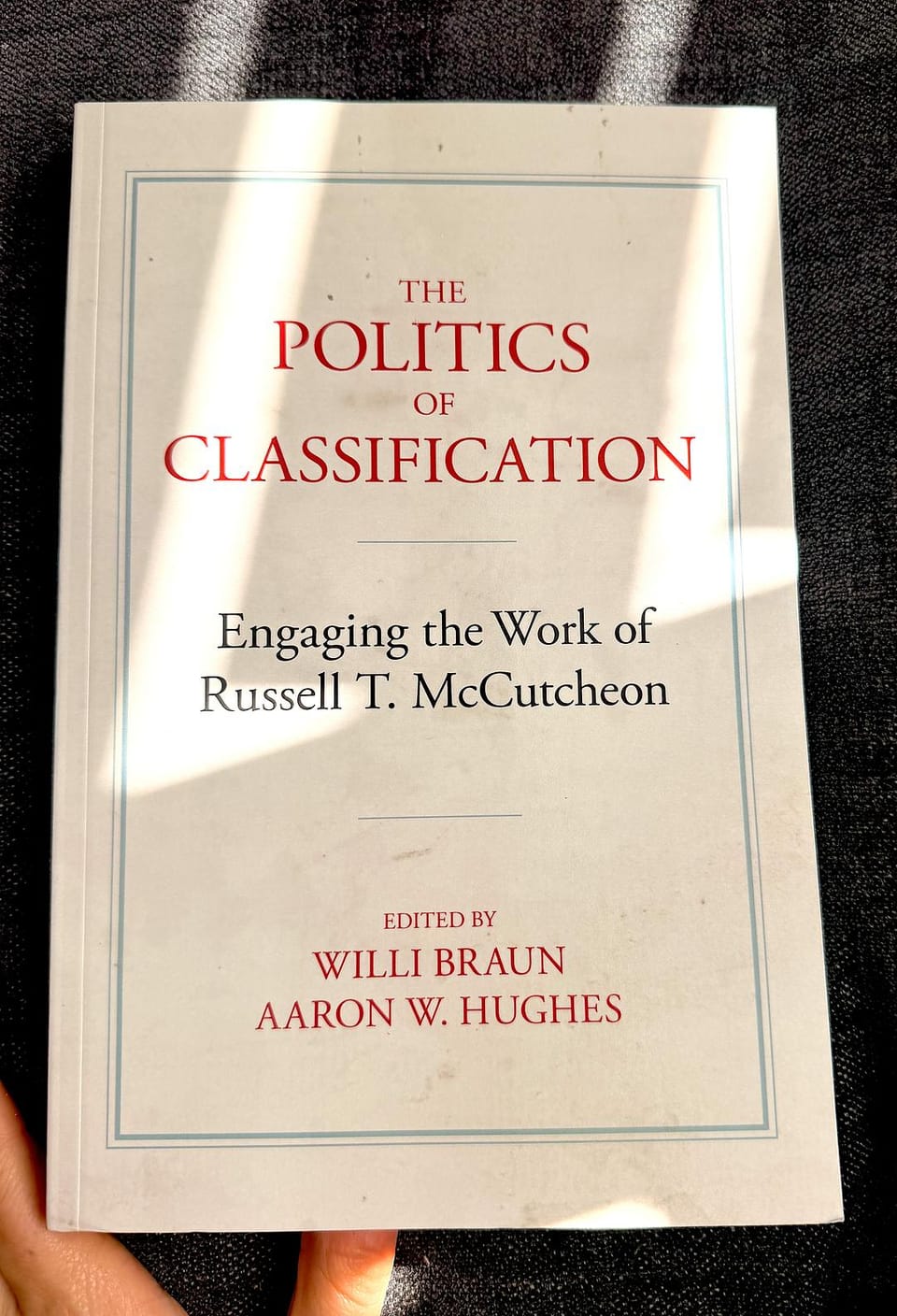
I'm delighted to share a new publication, The Politics of Classification: Engaging the Work of Russell T. McCutcheon (Equinox, 2026), edited by Willi Braun and Aaron W. Hughes. I was honored to contribute a chapter to this festschrift, which brings together an outstanding group of scholars to engage the work and legacy of Russell T. McCutcheon.

Russell's scholarship has had an enormous influence on the study of religion, encouraging scholars to reflect critically on the categories, classifications, and assumptions that shape our work. It was a pleasure to be part of this collection and to celebrate a scholar whose contributions have left such a significant mark on the field. Congratulations to the editors, contributors, and especially to Russell on this terrific volume.